


Natural, Cultural, and Historical Heritage
In addition to the natural landscapes throughout the territory, such as La Pedrera, El Carche and La Cingla in Jumilla, El Madroño in Ontur and Las Colleras in Fuente-Álamo (Albacete), visitors can enjoy a rich historical and archaeological heritage spanning millions of years. Noteworthy are the fossil footprints of the Hoya de la Sima, dating back to the Upper Miocene in Jumilla, and numerous shelters of cave paintings scattered throughout the territory, such as those of Minateda in Hellín or those of the Barranco del Buen Aire in Jumilla.
From the historical period, the great Iberian influence is worth noting through a visit to the site of Coimbra del Barranco Ancho in Jumilla or the famous Iberian sanctuary of Cerro de los Santos in Montealegre del Castillo, from where the Gran Dama Oferente was extracted. The Roman presence is also evident in all the territories of the Wine Route, highlighting the Roman villa of Los Cipreses or the funerary monument of El Casón in Jumilla or the famous Roman ivory and amber dolls found in Ontur.
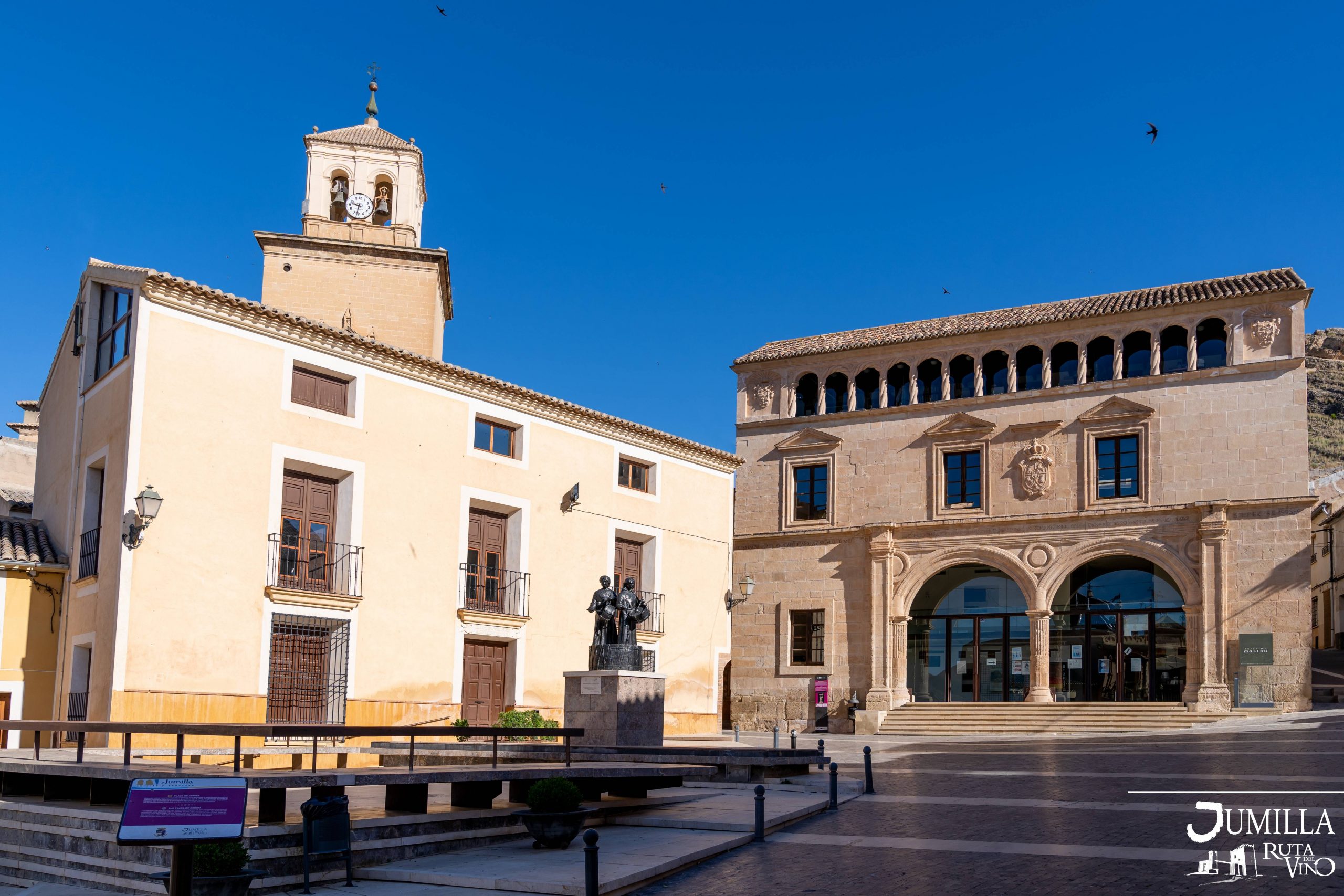
For lovers of the Middle Ages, the panorama is further completed with the presence of the Tolmo de Minateda in Hellín, the Sanctuary of Nuestra Señora de la Encarnación and Ermita del Cristo de la Antigua in Tobarra or the Castle of Jumilla. From the modern and contemporary era, a mandatory stop is the historic center of Jumilla, classified as a Historic-Artistic Site since 1981, unique for its modernist houses such as the famous one designed by the architect Joan Alsina, a disciple of Gaudí

